Evolution of Technology
Paleolithic (2.5 Ma – 10 ka)
The use of tools by early humans was partly a process of discovery and of evolution. Early humans evolved from a species of foraging hominids which were already bipedalwith a brain mass approximately one third of modern humans. Tool use remained relatively unchanged for most of early human history. Approximately 50,000 years ago, the use of tools and complex set of behaviors emerged, believed by many archaeologists to be connected to the emergence of fully modern language.
Stone tools
Hominids started using primitive stone tools millions of years ago. The earliest stone tools were little more than a fractured rock, but approximately 75,000 years ago,pressure flaking provided a way to make much finer work.
Fire
The discovery and utilization of fire, a simple energy source with many profound uses, was a turning point in the technological evolution of humankind.The exact date of its discovery is not known; evidence of burnt animal bones at the Cradle of Humankind suggests that the domestication of fire occurred before 1 Ma; scholarly consensus indicates that Homo erectus had controlled fire by between 500 and 400 ka. Fire, fueled with wood and charcoal, allowed early humans to cook their food to increase its digestibility, improving its nutrient value and broadening the number of foods that could be eaten.
Clothing and shelter
Other technological advances made during the Paleolithic era were clothing and shelter; the adoption of both technologies cannot be dated exactly, but they were a key to humanity's progress. As the Paleolithic era progressed, dwellings became more sophisticated and more elaborate; as early as 380 ka, humans were constructing temporary wood huts. Clothing, adapted from the fur and hides of hunted animals, helped humanity expand into colder regions; humans began to migrate out of Africa by 200 ka and into other continents such as Eurasia.
Metal tools
Continuing improvements led to the furnace and bellows and provided, for the first time, the ability to smelt and forge of gold, copper, silver, and lead – native metals found in relatively pure form in nature.The advantages of copper tools over stone, bone, and wooden tools were quickly apparent to early humans, and native copper was probably used from near the beginning of Neolithic times (about 10 ka).Native copper does not naturally occur in large amounts, but copper ores are quite common and some of them produce metal easily when burned in wood or charcoal fires. Eventually, the working of metals led to the discovery of alloys such as bronze and brass (about 4000 BCE). The first uses of iron alloys such as steel dates to around 1800 BCE.
The Industrial Revolution-21st Century
Industrial Revolution (1760-1830s)
The British Industrial Revolution is characterized by developments in the areas of textile machinery, mining, metallurgy and transport the steam engine and the invention of machine tools.
Before invention of machinery to spin yarn and weave cloth, spinning was with done the spinning wheel and weaving done on a hand and foot operated loom. It took from three to five spinners to supply one weaver.The invention of the flying shuttle in 1733 doubled the output of a weaver, creating a shortage of spinners. The spinning frame for wool was invented in 1738. The spinning jenny, invented in 1764, was a machine that used multiple spinning wheels; however, it produced low quality thread. The water frame patented by Richard Arkwright in 1767, produced a better quality thread than the spinning jenny. The spinning mule, patented in 1779 by Samuel Crompton, produced a high quality thread.The power loom was invented by Edmund Cartwright in 1787.
In the mid 1750s the steam engine was applied to the water power-constrained iron, copper and lead industries for powering blast bellows. These industries were located near the mines, some of which were using steam engines for mine pumping. Steam engines were too powerful for leather bellows, so cast iron blowing cylinders were developed in 1768. Steam powered blast furnaces achieved higher temperatures, allowing the use of more lime in iron blast furnace feed. (Lime rich slag was not free-flowing at the previously used temperatures.) With a sufficient lime ratio, sulfur from coal or coke fuel reacts with the slag so that the sulfur does not contaminate the iron. Coal and coke were cheaper and more abundant fuel. As a result, iron production rose significantly during the last decades of the 18th century.
Above all else, the revolution was driven by cheap energy in the form of coal, produced in ever-increasing amounts from the abundant resources of Britain. Coal converted to coke gave the blast furnace and cast iron in much larger amounts than before, and a range of structures could be created, such as The Iron Bridge. Cheap coal meant that industry was no longer constrained by water resources driving the mills, although it continued as a valuable source of power. The steam engine helped drain the mines, so more coal reserves could be accessed, and the output of coal increased. The development of the high-pressure steam engine made locomotives possible, and a transport revolution followed.The steam engine which had existed since the early 18th century, was practically applied to both steamboat and railway transportation. The Liverpool and Manchester Railway, the first purpose built railway line, opened in 1830, the Rocket locomotive of Robert Stephenson being one of its first working locomotives used.
Manufacture of ships' pulley blocks by all-metal machines at the Portsmouth Block Mills in 1803 instigated the age of sustained mass production. Machine tools used by engineers to manufacture parts began in the first decade of the century, notably by Richard Roberts and Joseph Whitworth. The development of interchangeable parts through what is now called the American system of manufacturing began in the firearms industry at the U.S Federal arsenals in the early 19th century, and became widely used by the end of the century.
Second Industrial Revolution (1860s-1914)
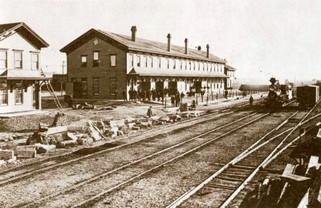
The 19th century saw astonishing developments in transportation, construction, manufacturing and communication technologies originating in Europe. After a recession at the end of the 1830s and a general slowdown in major inventions, the Second Industrial Revolution was a period of rapid innovation and industrialization that began in the 1860s or around 1870 and lasted until World War I. It included rapid development of chemical, electrical, petroleum, and steel technologies connected with highly structured technology research.
Telegraphy developed into a practical technology in the 19th century to help run the railways safely.Along with the development of telegraphy was the patenting of the first telephone. March 1876 marks the date that Alexander Graham Bell officially patented his version of an "electric telegraph". Although Bell is noted with the creation of the telephone, it is still debated about who actually developed the first working model.
Building on improvements in vacuum pumps and materials research, incandescent light bulbs became practical for general use in the late 1870s. This invention had a profound effect on the workplace because factories could now have second and third shift workers.
Shoe production was mechanized during the mid 19th century.Mass production of sewing machines and agricultural machinery such as reapers occurred in the mid to late 19th century. Bicycles were mass-produced beginning in the 1880s.
Steam-powered factories became widespread, although the conversion from water power to steam occurred in England before in the U.S. Ironclad warships were found in battle in starting in the 1860s, and played a role in the opening of Japan and China to trade with the West.
20th century
20th century technology developed rapidly. Broad teaching and implementation of the scientific method, and increased research spending contributed to the advancement of modern science and technology. New technology improved communication and transport, thus spreading technical understanding.
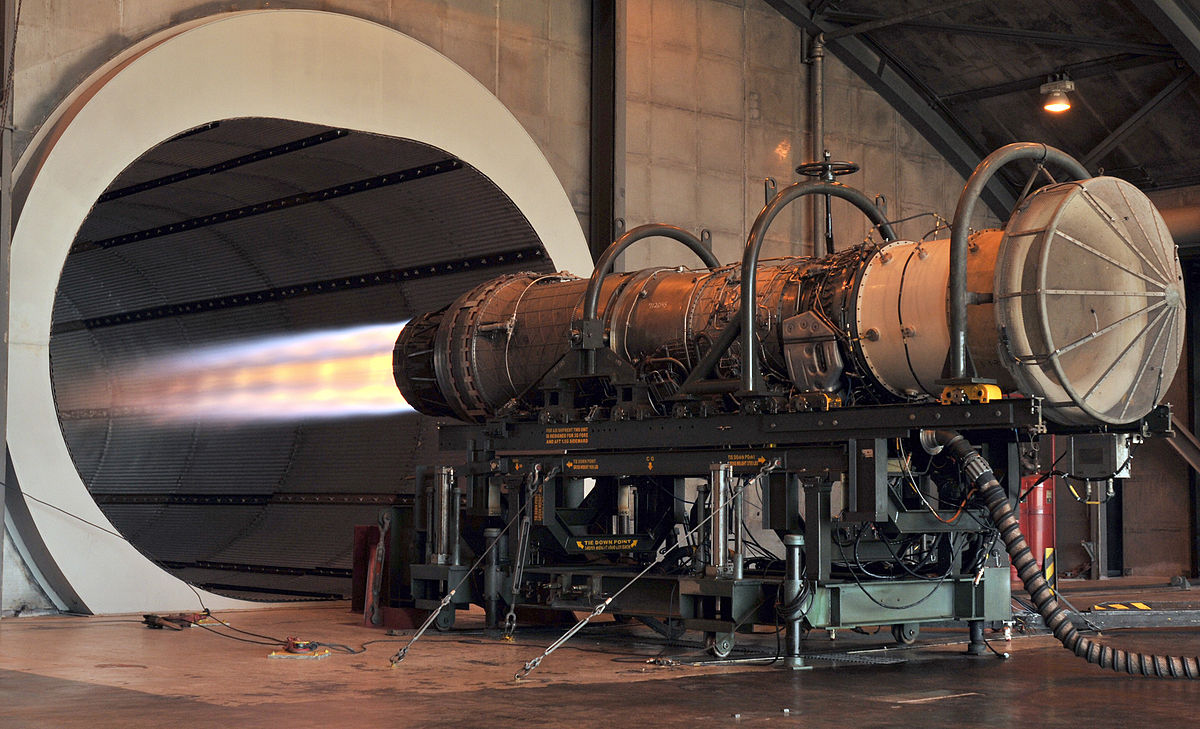
Mass production brought automobiles and other high-tech goods to masses of consumers. Military research and development sped advances including electronic computing and jet engines. Radio and telephony improved greatly and spread to larger populations of users, though near-universal access would not be possible until mobile phones became affordable to developing world residents in the late 2000s and early 2010s.
Energy and engine technology improvements included nuclear power, developed after the Manhattan project which heralded the new Atomic Age. Rocket development led to long range missiles and the first space age that lasted from the 1950s with the launch of Sputnik to the mid-1980s.
Electrification spread rapidly in the 20th century. At the beginning of the century electric power was for the most part only available to wealthy people in a few major cities such as New York, London, Paris, and Newcastle upon Tyne, but by the time the World Wide Web was invented in 1990 an estimated 62 percent of homes worldwide had electric power, including about a third of households inthe rural developing world.
Birth control also became widespread during the 20th century. Electron microscopes were very powerful by the late 1970s and genetic theory and knowledge were expanding, leading to developments in genetic engineering.
The first "test tube baby" Louise Brown was born in 1978, which led to the first successful gestational surrogacy pregnancy in 1985 and the first pregnancy by ICSI in 1991, which is the implanting of a single sperm into an egg. Preimplantation genetic diagnosis was first performed in late 1989 and led to successful births in July 1990. These procedures have become relatively common.
The massive data analysis resources necessary for running transatlantic research programs such as the Human Genome Project and the Large Electron-Positron Collider led to a necessity for distributed communications, causing Internet protocols to be more widely adopted by researchers and also creating a justification for Tim Berners-Lee to create the World Wide Web.
Vaccination spread rapidly to the developing world from the 1980s onward due to many successful humanitarian initiatives, greatly reducing childhood mortality in many poor countries with limited medicalresources.
 Jet Engines
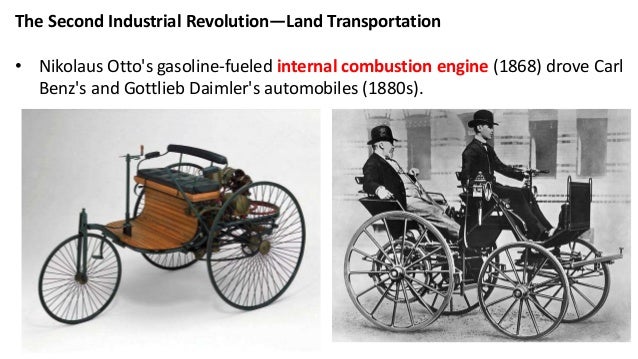
 Automobile/Transportaion
21st century
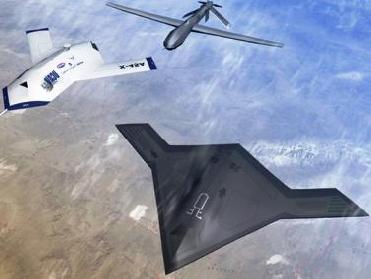
In the early 21st century research is ongoing into quantum computers, gene therapy (introduced 1990), 3D printing (introduced 1981), nanotechnology (introduced 1985), bioengineering/biotechnology, nuclear technology, advanced materials (e.g., graphene), the scramjet and drones (along with railguns and high-energy laser beams for military uses), superconductivity, the memristor, and green technologies such as alternative fuels (e.g., fuel cells, self-driving electric and plug-in hybrid cars), augmented reality devices and wearable electronics, artificial intelligence, and more efficient and powerful LEDs, solar cells, integrated circuits, wireless power devices, engines, and batteries.


Perhaps the greatest research tool built in the 21st century is the Large Hadron Collider, the largest single machine ever built. The understanding of particle physics is expected to expand with better instruments including larger particle accelerators such as the LHCand better neutrino detectors. Dark matter is sought via underground detectors and observatories like LIGO have started to detect gravitational waves.
Genetic engineering technology continues to improve, and the importance of epigenetics on development and inheritance has also become increasingly recognized.
New spaceflight technology and spacecraft are also being developed, like the Orion and Dragon. New, more capable space telescopes, such as the James Webb Telescope, to be launched to orbit in late 2018, and the Colossus Telescope are being designed. The International Space Station was completed in the 2000s, and NASA and ESA plan a manned mission to Mars in the 2030/2070s.

The Variable Specific Impulse Magnetoplasma Rocket (VASIMR) is an electro-magnetic thruster for spacecraft propulsion and is expected to be tested in 2015.
Breakthrough Initiatives, together with famed physicist Stephen Hawking, plan to send the first ever spacecraft to visit another star, which will consist of numerous super-light chips driven by Electric propulsion in the 2030s, and receive images of the Proxima Centauri system, along with, possibly, the potentially habitable planetProxima Centauri b, by midcentury

in the scale of 1-10 how would you rate your work??
ReplyDelete